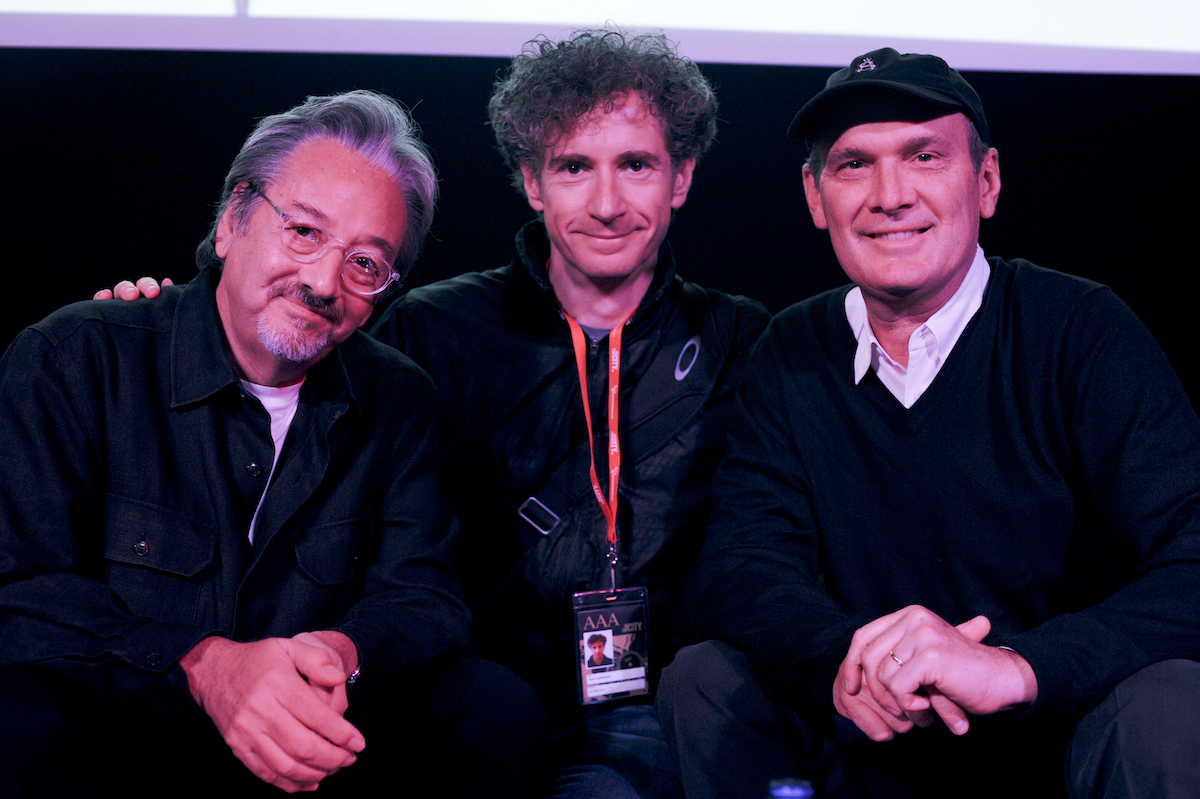
D2C is the key in 09

Taken from Music Week

09:46 | Monday June 8, 2009

D2C was declared this year’s 360-degree-style buzz word at Music Week’s Making Online Music Pay conference, as the event explored the potential benefits of selling products directly to consumers.

Digital Stores CEO Russel Coultart made the observation during an afternoon session at last Thursday’s conference at London’s Mayfair Hotel, as he revealed the Queen online store his company operates now has a turnover of “well over seven figures”. This makes it the band’s fourth-biggest earner behind the We Will Rock You musical, live performances and record sales.

In an earlier session at the event, which across the day examined a multitude of ways the music business can monetise the digital space, artist management company Connected Artists’ head of digital Andy Edwards offered a guide to selling directly to consumers, noting, “D2C is about getting to know fans as individuals, knowing what they like to do, how they are involved and how engaged they are.”

Coultart, speaking during the later panel What’s Working and Making Money added, “Music people aren’t really consumers, they are fans. Our job is to link our clients – the bands – to their fans, listen to them and give them what they want.”

“Fans want exclusive products, they want pre-sale tickets, they want to be members of fan clubs,” Coultart added. “What is important to fans is getting to one store where they can buy everything.”

“Everything”, in this case, can range from high-value goods such as a Freddie Mercury statue (available via Queen’s online store) to cheaper goods such as Nine Inch Nails spiral notepads.

But, Edwards warned, you have to match the artist to the goods offered, giving the example of an Il Divo picnic set as a good fit and drawing laughter from the crowd.

Edwards offered his own three-point formula for D2C success: know the fans; build an appropriate offering; underline with great customer service.

Coultart picked up on this last point. “A lot of new entrants to the market focus on flashy stuff that impresses everybody but doesn’t have a real structure. Somebody has to be there to stick a T-shirt in the post,” he said. “You need somebody who knows how to run a store. You need retail and marketing expertise.”

For Digital Stores, this focus on customer service and retail expertise meant massively trimming the number of artist stores it operates from more than 200 to around 20 today. “The long tail doesn’t work for the physical product,” Coultart explained, as this requires expensive warehousing.

However, Coultart did reveal that for all his company’s success – its revenues increased 58% in the last year, putting the company into profit – he has not been infallible.

“I turned down the Arctic Monkeys,” he said, with a wry smile.

The D2C Dilemma

This article was published in the Record of the Day PDF magazine, 2 April 2009.

Andy Edwards is Head of Digital for Connected, an artist management firm. Here he outlines what has changed in direct-to-consumer marketing, who are the players engaged in such activity and what managers and any representative for an artist needs to do to build a successful D2C campaign.

The recent demise of Trinity Street has served to highlight the challenges in realising the goal of bringing artist and fan closer together in a profitable manner.  It has prompted many to review available options and to consider the strengths and weakness of those operating within the D2C arena.  By D2C, we mean connecting directly to the fan and directly monetizing that relationship through the artist website.

In many respects the mechanics, ethos and financial dynamics of D2C are the complete antithesis of traditional music marketing.  It requires a substantial shift in mindset for many who have grown up within the industry over the past 20 years.  Thankfully, in 2009, there is a healthy atmosphere in that many individuals within the industry understand the need to reinvent, to learn and apply new skills and techniques.  This was certainly not the case even two or three years ago.

There are now plenty of options available to artists, but no one solution that is a perfect one-size-fits-all.  Nor is there a level of technical and operational sophistication comparable with an Amazon or an iTunes, so D2C services need to work hard to meet consumer expectations. 

Artists and their advisers must think wisely about their strategy, think realistically about managing their supplier and partner relationships and be savvy in delivering the most value to the fan while generating revenue in return.  Let us consider the options in selecting a suppliers and partners:

Major Labels

All the major labels have expressed a desire to move into D2C, the reality is that currently not one major label can fully manage the complete D2C process in-house.  This is not to say the majors cannot build expertise over time and it seems all of the majors are looking to build their D2C operations to some degree.  It is far too early to assess their efforts and those of us in the management community should keep an open mind.  The majors must, however, offer sensible commercial terms to the artist.

Live Industry Players

The big players in the live music sector have been much quicker to move into D2C, although this has been through acquisition.  Ticketmaster bought Nashville based Hello Echo, which has recently launched in the UK.  Live Nation has made a number of acquisitions as part of their artist services strategy including Music Today and Ultrastar.  This sector of the market has grown off the back of ticketing, combining presales with fan clubs memberships. 

The presale has been key to the growth of these players.  The proposition is a no-brainer: tickets are scarce and perishable and core fans want a trusted means of buying tickets before they sell out.  The execution is much more difficult and fan expectations are high.

A natural add-on to the presale is paid-for membership.  Subscriptions are driven more by access and added value than content.  Access could be a presale or meet and greets, added value could be store discounts, merchandise items.  Subscriptions must offer real value to the fan and a compelling reason to renew the annual subscription.  That is as true for a newer act selling subscriptions at $10 per annum as it is for The Rolling Stones selling subscriptions at $99 per annum.

Independent Store Providers

These include Sandbag (Radiohead, R.E.M.) and Digital Stores (The Beatles, Queen, Oasis).  Both have developed expertise in ticketing and digital product alongside a comprehensive merchandise offering.  Both have picked up clients from Trinity Street and both have ambitious plans to expand.  Like Trinity Street, these providers have found value in bundling.  For instance bundling a t-shirt with a ticket sale to drive merchandise sales. 

Where both these companies appear to be succeeding – where, apparently, Trinity Street failed – is to grow these initial purchases (for the ticket) into a longer-term and high value relationship (i.e. repeat purchase).

Merchandisers

Alongside independent store providers are merchandisers.  These players look to run the artist web store as part of an act’s merchandise deal.

On the one hand, a merchandiser offers strong marketing expertise.  On the other hand, the skills required to produce and market great merchandise and the skills required to set up and operate a web store are distinct and not necessarily found under the same roof.

Bravado, De-Lux and Backstreet are all merchandisers that also offer web store solutions.  Sandbag, in addition to being a store provider, also produce merchandise.  This is where choice of partners becomes difficult to determine.  Which configuration of merchandiser and store provider is best?

The benefits in the merchandiser running the web store include efficient stock handling and fulfilment in addition to a better margin (certainly for the merchandiser, possibly for the artist).  The counter argument is that a specialist web store provider (such as Digital Stores) will deliver greater sales volume by virtue of their specialist expertise, but also through bundling with other product lines such as ticketing, where the merchandise provider may have less expertise.

In summary, all the key players have their merits and individual goals of the artist will partly determine the best choice of partners on a strategic level. 

So how do you build a successful D2C campaign?

Marketing To The Fan As An Individual

The traditional music campaign marketed to the many.  The individual and their personal preferences were of little relevance to a record label that only required a single individual to go and buy one copy of any given album.  Provided there were enough individuals to send an album to double platinum, triple platinum … and beyond, success was achieved.

Dramatic falls in the size of the recorded music market prompted many to rethink this approach and ask “how to make money from acts that sell 200,000 units?”


Without wishing to oversimplify, a large part of the answer is D2C.  Of those 200,000 album buyers, there will be, say, 40,000 people who will be sufficiently more engaged and willing to buy concert tickets, t-shirts, etc.  This much we all know.  And the numbers are easy to understand: a CD buyer spends £10; a more engaged fan could easily spend upwards of £50.

The trick is to know and understand the fan as an individual. CRM (Customer Relationship Marketing) is much more than building a mailing list.  CRM is about communicating with fans in the right way; it about getting to know the fan and what they like/ don’t like and ultimately it is about delivering what the fan wants at the right time and doing so profitably.

The challenges can set in where – for example – the record company controls the mailing list and website, the merchandiser runs the web store and AN Other party does the ticketing.  It takes a strong and well-informed manager to ensure all these elements work in harmony.  Does the mailing list promote the merchandise store?  Does the label and merchandiser talk to one another?  How does a ticket buyer find out a live recording of the concert they have just seen?  Is a one-basket solution the answer?

All of this can be quite overwhelming for an over-stretched manager.  Individual stakeholders may feel a justifiable need to be involved with the website or web store and this may produce conflict, ultimately it is for the manager to decide who should be on “the team” and how it fits together.

Product and Price Points

The beauty about D2C is that it is possible to sell pretty much anything to anyone.  It is not about volume and some product lines may only sell a handful.  Former NIN drummer Josh Freese took this to extremes by offering – amongst other things – to join your band for a month, limited to one fan and for a fee of $75,000.

When it comes to products and price points there are very few rules and scope to experiment. It is perfectly feasible for many acts to offer anything from a 79p download up to a £50+ signed print through their web store, providing what is offered is appropriate to the act and their audience.  Jason Mraz likes taking photos, so a photo book has been made and available through his website, Il Divo sell picnic hampers and teddy bears through their site.  This is all good and appropriate to the artist and their individual fans.

Customer Service Is The New Marketing

What happens if tickets are late or go astray?  Ticketing providers need a plan B, C and D.  It is not uncommon for fan presales to end up on a guest list to get them in to a show they have paid money to attend.  What happens if a framed print is damaged?  How is it replaced and who covers the cost?  And there are downloads that don’t work and t-shirts that are the wrong size and a whole host of other challenges.

Customer service is not a sexy pastime, but if a fan has a bad experience via an artist website, it is the artist’s name that is damaged.  Something somewhere will always go wrong, the question is how is this managed and how can a fan be reassured when something does go wrong?  There is no point spending marketing money to acquire fans, if poor customer service switches them off, especially if the fan concerned spends over £100 a year.  This is food for thought for any career artist.

So to conclude, once selected the D2C team need to find the best way of working together, directed by the artist manager; they need to engage with fans and build a relationship; they need to monetize that relationship in a manner appropriate to the act and their fans; and there needs to be a plan if things go wrong.  It is quite a challenge, but an exciting one for those of us involved.  Ultimately D2C will help us all build a stronger and more sustainable business with a closer connection between artist and fan. 

An occasional blog

This really is an occasional blog.  I simply haven’t got the time to be blogging every day - and there are people who do that really well.  Thankfully, a lot of what I am working on right now is very relevant to the digital music world, so hopefully the odd post that I do make is of interest to those of you who stumble upon my blog.


Best,


Andy

Subscription services need to be sold

There was an interesting piece in yesterday’s MusicAlly email, referencing Mark Mulligan and The Times all of whom reported on the apparently slow start for Nokia’s Comes With Music.  This has seen Carphone Warehouse slash the price of the 5310 handset, the handset with which Comes With Music is sold.


Both Mulligan and MusicAlly concur that consumers need educating regarding the benefits of subscription services.  This raises questions regarding how such services are marketed, the channels used and the likely ROI.


It is helpful to consider some reference points in answering such questions:


The first is the development of Satellite TV.  Sky Television was launch in 1989, initially in competition with British Satellite Broadcasting.  Both companies initially suffered huge losses and this led to a merger of the two companies in November 1990.  The losses continued for some years and it was not until 1994 that BSkyB turned a profit.


Later in the decade, Sky pursued an aggressive policy of acquiring sports rights such as football and this has fuelled further growth.  According to Sky’s Wikipedia entry (as a quick point of reference), the company has posted uninterrupted growth in pre-tax profit every year since 2002, reaching £815m year ending 30 June 2007, on a turnover of £4,551m.  This compares to a loss of £759m in 1991 and a turnover of £93m that year.  Clearly it took time, but the payback was huge.


The second is the growth of bundled communication services.  Sky TV now offers broadband and telephony; telephony companies offer broad and broadband companies offer telephony; some also offer TV services.  In many cases, this has required an aggressive multi-channel marketing approach by players in the marketplace and an emphasis on up-selling existing customers.


Applying the two reference points to music subscription services:


The market players (both content owners and DSPs) need to be committed to developing the market over a sustained period of time and initially this could incur substantial losses before any kind of traction is achieved.  The subscription players are likely to be large corporates – such as Vodafone, Nokia and the ISPs, rather than start-ups, who can afford to subsidise such services initially before profitability is achieved.


The manner in which subscription services are presented and sold needs to not only increase awareness and education but focus on closing the deal with the customer.  The manner in which bundled communications services have been sold is very relevant to introducing music subscription services that can be sold alongside that telephony or TV services that are currently been sold by ISPs.  ISPs have learned how to up-sell their customers and this knowledge will help them sell music subscriptions also.

Apple’s move to DRM-free

While it is obviously great news that Apple has announced that all the repertoire offered through iTMS shall now be DRM-free (all the major labels are now on board with the format), it is a pity they have not opted for 320 kbps mp3 files rather than the iTunes Plus format 256 Kbps AAC files.


And while Apple’s dominance of the digital music market will undoubtedly continue for some time, it begs the question why they continue to sell AAC, a format in a market where mp3 is the consumers clear favourite and where the mobile phones are now including a music player and enough storage space to rival the iPod nano as a matter of course.  As 7digital.com’s Ben Drury points out on Hypebot, the AAC format is restricted mostly to Apple products.


It seems Apple are continuing with the strategy of selling music in such a way that it protects and bolsters sales of the iPod?  And while this has proved successful up until now, it remains to be seen whether this will prove the case moving forward.


The other great positive is variable pricing.  It has taken some time, but commonsense has now finally prevailed.  Provided that DSPs are responsible in their pricing (i.e. not discounting what should be premium product), this will be a good thing and will help grow the a la carte download market further.

Andy Edwards joins Connected Artists as Head of Digital

Guillemot’s manager Ed Millett joins Connected

Andy Edwards to run New Digital Division

Connected Artists, the Covent Garden based artist management company, has now expanded its artist management team by recruiting Guillemots manager, ED MILLETT.  The band is now recording their third album for Polydor, following their Mercury Prize nominated “Through the Windowpane” and 2008 follow-up “Red”. Millett also manages Laura Groves / Blue Roses whose debut album will be released on XL in 2009 and The Blighters who are currently attracting A&R interest.

Paul McDonald, the head of Connected Artists, says “With Guillemots and James Morrison sharing the same label in Polydor, I have always heard good things about Ed. With Ed and David Boyd (ex Hut / Virgin M.D.) now in our team I feel we offer artists a varied, credible and skilled management team”.

Ed Millett says “I am excited by Connected’s vision of creating a variety of different models in which artists can thrive artistically and commercially. The key for me really is about flexible thinking and Connected certainly has that approach.”

Colin Barlow at Universal, now setting up his new Geffen imprint, says “I’m excited about Ed joining Connected. It feels like they’re building a really strong team with a great roster.  It’s a management company I know Geffen will be proud to be associated with.”

Connected has also recruited ANDY EDWARDS in the role of Head of Digital.  Edwards’ involvement with digital music spans 15 years. His career also includes stints at Sony Music and Music3w.com in addition to a longstanding involvement with the In The City Music Convention.

Paul McDonald says “Andy is the first part of a specialist digital / e-commerce team we are building here. This area is one where we aim to bring added value for our clients.”

Andy Edwards says “The Connected team have an outstanding track record, impeccable taste and an innovative approach to the management of their artists.  Digital is now an essential part of the management process, but also a huge challenge”

Peter Rudge of Octagon, non-executive director of Connected (and manager of Il Divo, Anastasia and James) says “The Connected/Sound Advice group continues to evolve, and establish itself as the template for the entertainment company of the future. The vision for Connected is to have an empowered team of managers, working with and supplementing the great work and resources of labels, publishers and those involved in the live sector.”

Connected is associated with SOUND ADVICE, the legal and financial firms whose clients include Yusuf Islam / Cat Stevens, Pendulum, Paul Oakenfold, Stargate and Seasick Steve and emerging artists such as Little Comets and Alan Pownall.

Also working out of Connected / Sound Advice’s building in Covent Garden are Music Ally, Sellaband, Marc Picken’s West and Grafikmedia.

Azoff and Ticketmaster – the implications

Irving Azoff is probably one of the smartest players in the modern music business; if not the smartest. He is legendary and there is little point my detailing his achievements for those outside the music business unfamiliar with his reputation because so much ahs been written about him, if you don’t know the whole story … just Google him and follow your nose.


Suffice it to say that in recent times, he’s built the most powerful artist management company in the world and has subsequently leveraged this achievement to reach a ground breaking deal with Ticketmaster which sees Azoff installed as CEO, Billboard has the whole story here.


Bob Lefsetz has already given his thoughts on the deal here and here, but what I find interesting is the link between fan and artist and the role ticketing plays.


Worth noting in the Billboard article that “increasingly, ticketing has become the critical touchpoint and the keys to the kingdom in interaction between fans and artists. Ticketmaster and Live Nation both want to hold those keys, but ultimately they are in the artists’ pocket. The highest stakes going forward will be won and lost in artist relationships.”


Ticketing is important for a number of reasons.


First there is scarcity. The CD is always on the shelf (metaphorically speaking), the download is always available on iTunes … but tickets sell out.


Second there is trust – becoming more important as secondary ticketing comes under scrutiny with questionable websites offering fictitious tickets for sold-out shows. Who are you going to trust if you’re a fan? You trust the artist.


Third, there is the opportunity to add value and bundle. Selling VIP packages, premium seats and a chance to meet the band is one option. Cross promoting live recordings of the show, merchandise and other product lines off the back of the ticket sale add to the depth of the relationship.


Ticketing is the driver – more so than music sales (whether that is download or CD) - and the most fundamental offering in building the relationship between artist and fan. As Billboard says, “the keys to the kingdom

The Value of Video

In the last issue of Billboard, Doug Morris responded to the assertion that “it’s been cited elsewhere that videos are bringing in $20 million per year” by stating “Not even close.  Not even skimming the surface.  It’s far more than that.  Videos are very valuable.”


Morris’ comments are - in part - reference to Universal’s deal with YouTube and others whereby Universal has secured substantial advances for the use of its video content.  But his comments highlight the potential for video across digital media more generally - whether that is social networks, a la carte downloads or mobile video.


It has supported what I’ve long held to be true, initially based on gut feeling and over time underlined by various empirical sources from DSPs and elsewhere.  The long tail that exists across digital music as a whole is – I feel – especially relevant to music video as there are relatively few other sources of obtaining many of the videos now legitimately available through iTunes, 7digital.com and elsewhere.


The top music videos on iTunes this week is a mixed bag.  Chart hits such as Britney, Leona and P!nk at the top of the list; Michael Jackson’s classic video Thriller at number five, but at number six David Gilmour’s performance of Shine On You Crazy Diamond at number six.  My own use of iTunes video store has seen me acquire long lost videos from Throwing Muses, Pixies, et al.  Many of these videos I never even saw first time round as they were never played on TV.  The long tail perfectly illustrated.


Music videos have also followed the same dynamic as the single track audio download in that they bring a previously bundled format to a broader audience.  I would never buy a George Michael DVD, I’m just not a big enough fan to make that kind of purchase; but I absolutely had to have the video to Freedom, one of my all time favourites. 


But what makes video especially compelling to the rights owner is the higher margin derived from such sales, most retailing at £1.89 rather than £0.79.  Interesting to note Doug Morris’ other comment in the same interview “We don’t look at anything as promotion”.


Moving forward, I’d like to see rights owners further embracing video as a digital format.  Long form video is now available on iTunes, which now includes full length movies; so we should also see a move to include both long form concert footage, documentaries and docu/ performance footage that might previously may only have been included as a DVD extra.

In The City - 2008

The In The City Music Convention is probably one of the most established and well regarded music conventions in the global music business.  It has run every year since 1992 but this year was both important and poignant as it was the first event not to have the input of its co-founder Tony Wilson, who passed away last August.


ITC had to prove it can survive and adapt and it certainly did that.  There was a mix of old school and new school; the legendary and the groundbreaking.  There were artists and grass roots entrepreneurs/ executives mixing with the big players.  Having Andrew Loog Oldham MC the event with Seymour Stein and Richard Gottehrer in attendance underlined the legendary; Eric Garland of BigChampagne underlined the new school and Jarvis Cocker’s songwriting keynote appealed across the board.


My role at In The City is to advise on panel and keynote content, reach for the address book and bring in topical and interesting speakers.


I was thrilled to secure legendary British born/ LA based marketing executive Ray Cooper to moderate the New New Marketing.  I consciously went for a mix of people – major label, indie label, artist management, brand management.  The room was picked with big players such as Jazz Summers, Tim Clark and David Enthoven, in addition to those starting out.  The panel considered how do you market and break an act in the current climate and whether you can balance the books.  Interesting that Mark Collen (ex EMI) felt that following the traditional major label marketing model you can’t; equally Natasha Kizzie of KLP laid a case for brands being able to offer an artist media value in addition to revenue.


Nick Stewart (The Captain) did an excellent job of moderating the All Rights panel – which discussed the concept of how a basket of rights can be assigned by an artist such that … to quote the panel … there are no record deals anymore.


The digital panels were all held on the Monday.  We figured it would be good for panelists to work the room a bit also and connect with other digital music people there on the day.  The digital buffet considered a la carte, subscription and ad-funded panels in turn; while the On The Storefront panel considered the artist website as a D2C model.  To bring it all together, Ted Cohen hosted a wrap-up of the day’s events.


There were plenty of highlights.  Maria Forte (the lady who struck the digital deals for Radiohead’s In Rainbows) and Vince Bannon of Getty Images gave good value to the a la carte panel; Nokia and Vodafone were both represented on the subscription panel moderated by Mark Mulligan; while Merlin and The Orchard sparred on the ad-funded panel, which also featured Anthony Lukom, the very smart and very eloquent MD of Myspace UK; Debs Wild and Gary McClarnan did a very funny role play to illustrate how even developing acts can make money through their websites; and Ted Cohen’s wrap saw ex- EMI Global Head of Digital Barney Wragg and We7 CEO Steve Purdham debated whether technology or business terms were to blame for the slow start to the legitimate digital music business.  Overall, it was quite a feast.  Pardon the pun.


On a personal level, In The City is especially poignant as it connects me with my roots.  I grew up in the North West, moving several times but always within a thirty mile radius of Manchester.  1989 was the year I turned eighteen and left home.  The year of The Stone Roses, Happy Mondays, Inspiral Carpets and their Cool As Fuck T-shirts (I still have mine), trips to Affleck’s Palace … and, most of all, the Hacienda.  It all revolved around Manchester, a scene that grew in large thanks to Factory Records and Tony Wilson; whose legacy continues with the In The City Music Convention.  Long may it last.

In The City - Digital Overview

In The City has probably had a longer and more committed association with digital media than any other music convention.


When I attended the inaugural event in 1992 there was a panel discussing “the future” which included the notion that one day music may not be sold in record shops; during the mid-nineties Interactive City was formed to give more focus to digital; and even as the dot.com bubble was bursting in 2001, there were panels and keynotes, including an entertaining interview with Marc Geiger of ARTISTDirect, to consider where we were all heading.  Tony Wilson was an early and enthusiastic advocate of digital, not only championing digital within the ITC fold, but also launching a website music33.com on the premise that digital music should be cheaper – radical thinking then, which is commonly accepted now.


Just as the spirit of In The City lives on, so does the focus on digital which continues to be part of the fabric of In The City. 


This year’s even at the Midland Hotel in Manchester, sees the digital panels taking place on Monday 6th October 2008 and we have been comprehensive in scheduling a series of events that considers the key talking points for digital right now.


The term D2C – direct to consumer – has found increasing resonance during 2008, the concept that artists can not only connect directly with their fans but also sell directly to them also.  The On The Storefront panel, shall consider the key ingredients for success.  The panel shall be moderated by Marc Marot, a prominent artist manager with plenty of experience of D2C, having previously run an early stage D2C artist website company and commissioning the first u2.com website in 2000.


Mark Mulligan from Jupiter Research wrote an interesting article earlier in the year which identified three distinct sectors of the digital market as drivers for growth: a la carte downloads; subscription; and ad-funded models.  This formed the seed of an idea … which we have developed into a series of panels … The Digital Buffet – A Three Course Lesson to consider each of these sectors in turn.


Barney Wragg, the former Global Head of Digital, EMI and the first major label executive to do a DRM-free deal with iTunes shall moderate the a la carte panel; Mark Mulligan shall moderate the subscription panel and Paul Brindley from Music Ally shall moderate the ad-funded panel.


Overall, the quality of panellists is superb.  We have senior executives from Sony BMG, Vodafone, Myspace, Nokia, William Morris Agency, Merlin, We7 and prominent individuals such as Ben Drury of 7Digital and Maria Forte, the lady who did the digital deals for Radiohead’s In Rainbows … amongst many other names.  For a full list of names, panel times, etc click here.


Finally, there shall be a wrap up by Ted Cohen, to continue the dining theme “Ted Cohen’s after dinner get together”.  Ted shall bring together key individuals from the day’s events to discuss the key findings of the day and the key trends in digital.

Next Page →