I Want to Thank God: Music Award Shows

This article was first published in Record of The Day, which you can read here.

Music business executive and diversity advocate Andy Edwards highlights some interesting nuances about the intersection of race and religion in attitudes to faith amongst the music industry workforce. This op ed is the personal view of the author.

Screenshot

I have been to plenty of music award shows honouring artist and executive talent, and one thing I have long observed is that when accepting an award, thanking God in an acceptance speech, and how we react to this often seems to reflect how well we understand one another on a human level.

It boils down to this: it is not uncommon for Black people to thank God when accepting an award, and it is also not uncommon that somewhere in the room, some White people will be sitting at a table being a little too cool for school. That could mean rolling their eyes, facial expressions that imply disapproval, or just sitting there looking a bit uncomfortable.

I put this bluntly because I know it to be true. I have seen it more times than I would like to be the case. Several Black friends in the industry have noticed this also, with all of them remarking along the lines of “what is that about?” 

Thanking God and how we react to this is one of the nuances of diversity and a litmus test of how inclusive we are as an industry.

This example might seem innocuous, but it is subtle inferences like this that can hide a more damaging prejudice. When I first wrote about music industry diversity after #BritsSoWhite in 2016, I recalled how a former work colleague once said of a Black candidate when recruiting for a role, “Hmmm, bible basher,” all because the person referred to some work they did for their local church during the interview. The candidate did not get the job.

There are some interesting numbers that shed light on these differing attitudes. Since 2016, UK Music has conducted a bi-annual survey of the music industry workforce. The headline figures are impressive. Respondents who identified as Black, Asian, and ethnically diverse collectively account for 25.2% of those who responded to the 2024 UK Music Diversity Survey, up from 15.6% in 2016. The music industry can be proud of the progress it has made, but there is more work to do, and while the point I raise may be uncomfortable reading, it is a good example of the kind of issue we can better understand and the numbers help us do that.

The workforce survey also contained a question about faith. It shows that, on the whole, the music industry workforce is an ungodly bunch, with 63.5% of respondents having no religion (or were agnostic or atheist), compared to 37.2% for the UK population as a whole and only 20.7% of respondents identified as Christian, compared to 46.2% for the population as a whole. Perhaps it is not surprising that people in a creative industry such as music are far more questioning of religion, especially those of us raised on Monty Python, John Lennon, and various alternative rock bands amongst others, but this is not the whole story.

Comparing responses to the faith question by ethnicity reveals big differences in the music industry’s attitude to faith. A massive 63.1% of Black respondents identified as Christian, compared to only 18.8% of White respondents, and only 15.8% of mixed-race respondents.

Furthermore, comparing the proportion of White people in the UK who identify as Christian with White people in music who do so shows a massive drop from 50.2% to 18.8%. In contrast, comparing the proportion of Black people in the UK who identify as Christian to those in music who do so shows a much smaller dropfrom 67.0% to 63.1%.

Whichever way you look it, the differences in attitudes to faith by ethnicity within the music industry are huge. I was expecting to see a big difference, but these figures show that Black people who work in music are more than three times as likely to identify as Christian as White people who work in music.

Full disclosure: I attended a Church of England school, but in adulthood church has mostly been weddings and funerals. I tick the Christian box, but I am very lowkey about it. My first experience of differing attitudes to faith was at university when a Nigerian friend chastised me over something I don’t recall by saying, and this bit I remember word for word, “Andy, your problem is that you do not know your bible. If you knew your bible, this would not be a problem for you. What is it with you British? You come over, colonise us, and ‘give’ us Christianity, and you do not even go to church yourselves!

My friend, who is Igbo, was ironically referring to how British colonialism spread Christianity, often for reasons of exploitation rather than benevolence, in south-eastern Nigeria, only for it to then decline in the UK. This shift is part of a broader trend. There are now more Christians in Africa than in Europe (including Russia). It is also true that many Africans, particularly in Egypt and Sudan, adopted Christianity from the first Century AD, before it reached Britain and much of Europe. The point is that Africans (past and present) have made Christianity their own, and often with a vibrancy that is lacking in Europe.

In the UK, some Black churches have an entirely different approach that is more celebratory than a traditional Church of England service. According to one estimate, there are 250 Black-majority churches in Southwark alone. Black churches are often social networks for people of all ages, including people in music. Musicians, vocalists and songwriters have all honed their skills in Black Churches. I once introduced a DJ to a label executive, who already knew each other by sight because they attend the same church.

Religion is such a contentious subject and responsible for so much strife, but it is also a fertile ground for creativity. Questioning religion is valid, but can we also respect those, regardless of background, who find comfort, guidance, and community in their faith at the same time?

Significantly, the diversity survey questionnaire asked about people’s faith, not their religion. Perhaps this is key? Religion can be such a polarising concept, and, maybe, we should think about an individual’s faith rather than their religion. Faith is more personal and reflects basic human values and beliefs, rather than religious institutions and structures which can be loaded with a multitude of issues.

Misconceptions shadow almost every social interaction on some level, and they are multiplied by race, faith, and other protected characteristics. By communicating more, and understanding varied individual experiences, we build stronger bonds that help us become more inclusive as an industry.

Not all award shows are the same. At the MOBO Awards and the Young Music Boss Awards, not only do many recipients thank God in their speeches, but the audiences warmly accept them.

The music industry is doing well on diversity and still improving. It could do better on inclusion, and we can all contribute to that process. Keep listening, learning, and challenging each other without judging. That is something we can all celebrate.

© Andy Edwards

Andy Edwards is a music business executive whose professional experience covers artist management, record labels, rights acquisition, and digital marketing. Andy founded the Futures Group, an inclusive forum for young artists and music executives, and has written extensively on diversity, antiracism, and neurodiversity in the music industry. He authored two editions of Diversity In Cycling to address the lack of diversity in cycling.

This Is Music 2023

Last year, the music industry finally returned to growth, recovering from the pandemic and benefitting from underlying growth in recorded music and music publishing revenues. That is not to say that challenges do not remain, and, as is often the case, smaller grassroots music creators and industry players suffer the most. Investment in the

As the world reopened in 2022, it is worth discussing exports because 2022 was the first full year after the UK left the European Union. On the face of it, music exports are strong, but music creators at all levels, and especially at grassroots level, face challenges. This Is Music takes a look at this in more depth. There is also a case study from Glass Animals, a global success story that was a decade in the making.

Investment in education and talent pipeline are also key factors to future growth. Recording studios have faced soaring costs, including business rates, and this is explored in the report. Violinist David Grubb talks us through his career as a musician and artist and how he has benefitted from a strong educational foundation. This year’s report also introduces an emerging trends section, discussing where the market is going in 2023, and lawyer Cliff Fluet discusses the potential of artificial intelligence (AI).

To the numbers: the music industry contributed £6.7 billion to the UK economy during 2022 in terms of gross value added (GVA). Exports topped £4 billion, and employment stood at 210,000. 

Since UK Music published its first economic report in 2013, there have been many changes across the industry, such as the shift to streaming and the growth of festivals. Through conducting this work year after year, we have developed a much deeper understanding of the business dynamics behind the music industry and what that means in terms of economic value. Consequently, the original methodology that was devised over a decade ago needed updating.

Over the past year, UK Music has worked with our economic consultants, Oxford Economics, to undertake a comprehensive methodology review to ensure the processes behind this report reflect the evolution of the music industry, and the latest thinking and best practice.

This year’s report does not offer direct comparisons with previous years for GVA, exports and employment figures owing to the methodology review, which affects these three key metrics. However, in 2022 the UK music industry outperformed 2019 by a significant margin to produce its best year ever. We know this from assessing various contributing metrics, including revenue figures. Some revenue figures are included in this with report with year on-year comparisons as these were unaffected by our methodology review.

Live music and international touring returned during 2022, boosting GVA and exports. A combination of rescheduled shows from 2020 and 2021 and newly scheduled shows for 2022 made for a packed calendar. More live music fuelled music merchandise sales, and public performance revenues also rebounded.

Recorded and publishing-related revenues grew during the COVID-19 pandemic and continued to grow in 2022. These sectors also contributed to the GVA and exports figures for 2022.

Employment has also rebounded and now sits at 210,000. The employment number is tempered by the fact there have been consolidations and redundancies in some areas, and some music creators and self-employed workers stepped away from the music industry during the pandemic.

While the headline figures for the UK music industry are good, there are a number of serious challenges across the industry. Small venues, independent festivals, recording studios, and music creators all face financial pressures at home in the UK and from the consequences of Brexit, particularly for touring artists and musicians.

Moreover, even where the industry has shown growth, such as in live performance and recorded music, questions remain about whether this growth can be sustained, and not everyone is experiencing the same level of growth.

This report highlights these issues and how they might be addressed, while celebrating the music industry’s economic successes. Thoughtful and targeted support in areas where help is needed will ensure that music continues to be a great British success story in the years to come.

Click here to read the report.

This Is Music 2022

This Is Music was a difficult report to write this year because 2021 was a year of transition and mixed messages. The music industry began its recovery. Sort of. Live music reopened, then shut again, and this had a ripple effect on ancillary income that further disrupted the music industry, especially the music creators who lie at its heart.

For this year’s case study, I looked at Wolf Alice and the team around them. The band is well established in their career and better placed than most to weather the storm brought about by the pandemic. But even for a band at that level, it was not all plain sailing, and they had to adapt to changing circumstances. Please take a look.

As for the numbers, the music industry contributed £4 billion to the UK economy in terms of Gross Value Added (GVA) in 2021 – an increase of 26% on 2020. However, this was still 31% down on the £5.8 billion the industry contributed in 2019 pre-pandemic. That year, recording studios stayed open, however, they operated under strict COVID-19 protocols, and the continued enforcement of global travel restrictions meant that many international clients stayed away. 

Live music eventually returned, but not until mid-summer of 2021 and was disrupted again due to the Omicron variant. There were still many challenges, such as COVID-19 outbreaks

among artists and their road crews, which led to cancellations, and lower attendance at some live events, but the industry managed to make the most of the relatively short window to herald the return of live music. Even in the first quarter of 2022, many shows rescheduled, owing to the lingering impact of the Omicron variant.

Recorded and publishing-related income remained strong, with substantial increases in both streaming and vinyl revenues and a recovery in synchronisation (sync) income. Exports grew 10% to £2.5 billion but were still down 15% from 2019’s £2.9 billion. A lack of international touring, Brexit-related barriers, and a lack of music tourists visiting the UK have restricted export recovery. Nevertheless, recording and publishing export income continued to grow during 2021, even in the face of increased global competition. In a post-Brexit world, ensuring that trade agreements protect and support recording and publishing income for music creators and rights owners alike will be crucial to sustaining future growth.

Employment improved year-on-year, up 14% to 145,000 in 2021, but was still 26% lower than 197,000 in 2019. Music creators and live music workers experienced the greatest decline in employment and while both sectors are recovering, there is a long way to go. Those who could access government schemes, such as the Self-Employment Income Support Scheme (SEISS), were well placed to return to work once live music resumed at the end of July. Many industry organisations provided hardship funds to support those most vulnerable, but those who fell through the cracks either retired, retrained, or sought alternative employment in other sectors.

I believe that employment will recover further during 2023, but some individuals may have left the industry for good. There are skills shortages in some areas, for example, freelance crew and musicians, and a lack of access to a European workforce to plug the gaps for UK based events.

The recovery has begun, but there is still a long way to go. The British music industry cannot take anything for granted in rebuilding and ensuring that it retains its place as a leader in the global music market.

Click here to read the report.

Autism, ADHD the music business and me: Andy Edwards on neurodiversity and industry inclusion

This article first appeared in Music Week.

Andy Edwards is a music business executive, director of research for UK Music and an artist advisor and consultant, clients include HMUK and two-time Grammy award winning producer, mixer and engineer Cameron Craig. 

Here, he writes about his experience of autism and ADHD, and calls on the music industry to be more inclusive and supportive of neurodiverse talent…

During the summer of 2019, I was diagnosed with Attention Deficit Hyperactivity Disorder (ADHD) which, together with Autism Spectrum Disorder (ASD), dyslexia, dyscalculia and a number of other conditions, falls under the umbrella of neurodiversity. The term refers to the variation in cognitive functioning that can lead to differences in how individuals think and act.

Shortly after my diagnosis, Universal Music launched its Creative Differences handbook to help companies in the creative industries better understand neurodiversity and how to attract, retain and promote neurodiverse talent. I went public with my own ADHD experience. Almost two years on, it is worth reflecting on what happened next.

The initial reaction was incredible. Many people reached out to me directly to tell their own stories. A young woman still at university and only recently diagnosed wrote, “now I know I can have a career in the music business”. I choked up when I read that.

At least five people have since told me they sought their own ADHD diagnosis as a result of hearing my story. Some are open about their newly discovered condition, others, understandably, are not. A few of us have begun an informal chat group, we get together every so often over Zoom to share experiences and explore where this might go. More people are welcome to join.

There is a part 2 to my story. In December 2020, I was diagnosed with ASD or, to be more precise, High Functioning Autism (HFA), which is similar to what was previously known as Asperger’s Syndrome. Some people still refer to Asperger’s Syndrome even though it is no longer an official diagnostic term. The name thing is evolving and I find it a little confusing. What do I tell people? Do I have Asperger’s or am I autistic? Currently, I am flipping between the two. What is the difference, anyway?  

Classic autism can be very debilitating, often involving severe cognitive and verbal communication impairment. HFA/Asperger’s is a form of autism, under the autism spectrum. The symptoms are broadly the same as classic autism except that cognitive and communication skills are normal, meaning that someone with Asperger’s can think and speak as well as the next person. For this reason, many autistic people, particularly women, go undiagnosed.

Social skills can be a challenge, regardless of where someone sits on the spectrum. Misreading social cues such as facial expressions or sarcasm, avoiding eye contact or unintentionally interrupting someone are examples.

Repetitive behaviours are common. When it comes to clothes, I buy the same Diesel jeans and John Smedley roll neck sweaters over and over again. I had a thing for roll necks long before Steve Jobs made them cool. 

Another autistic trait is absorbing oneself in subjects that hold a strong interest and then sharing that interest in expansive detail with others. You have to remember that not everyone has the same level of interest or attention to detail. The screengrab on my iPhone reads “Less Is More”.

The overarching experience for anyone with autism is that engaging with the world around you is a challenge and many people may not get you in the way that you intend. With classic autism the symptoms are more obvious, but with Asperger’s, where the symptoms are more subtle and easy to mask, very often you are just branded as “weird”. 

For an environment such as the music business, admitting to being autistic carries a lot of risk. This is a world that places a premium on social charm and personal image; to be street smart, cool and popular. Autistic people can be all of these things, but in their own distinctive way, which may not be the norm.

My reason for writing this article was a growing realisation that autism is highly prevalent in music, that it carries significant stigma and is massively misunderstood when it need not be. Like other forms of neurodiversity, autism can be an enriching experience both for people with the condition and those around them. It takes an equal amount of understanding and appreciation on both sides to achieve that enriching experience. Saying things like “everyone is on the spectrum,” is not helpful, mostly because it is wrong. It also diminishes the lived experiences of those who meet the diagnostic criteria.

A common misconception is that people with autism are more likely to be good at science and maths rather than creative disciplines. Elon Musk declared he has Asperger’s on Saturday Night Live (SNL) and while it is a positive thing for a billionaire tech entrepreneur to say this, it did reinforce the “mad scientist” stereotype. The reality is that autism works just as well with a creative mind.

Dan Aykroyd is autistic and so is David Byrne, both of whom appeared on SNL long before Elon Musk. Many creative people including Daryl Hannah, Sir Anthony Hopkins, Sara Gibbs, Ladyhawke, Courtney Love and Example are all autistic. Broadcaster Melanie Sykes has revealed her own late-in-life autism diagnosis with a story very similar to my own.

Creativity and autism can be a great match. Getting into a routine and delving deep into a subject that inspires you can help create great work. With an inquisitive mind, you keep pushing the boundaries whether that is writing a novel, directing a movie or making a record.

Autism can give you a rawness, a directness and an authenticity that can help you cut through. You say what other people might only dare think. I once told an iconic rock act, renowned for their perfectionist approach to production and mixing and who had categorically refused to release official bootlegs of their live shows, that “fans just want the recording straight from the mixing desk, warts and all.” 

After the meeting, my colleague joked about the band’s facial contortions as I made my point. Some years later at the press conference announcing their next stadium tour, one of the band told assembled journalists that for the first time every show on the tour would have a live bootleg recording, “straight from the mixing desk, warts and all”. Result.

Getting diagnosed has enabled me to make meaningful improvements to my working life in the music business. There are two take-outs to share about this: the first is improving your own self-awareness, the second is ensuring the world around you adjusts to meet your needs. 

Both of these things must happen because autistic people cannot do this on their own. If the music business is serious about being inclusive then it must do the work too. That is why initiatives such as Universal Music UK’s Creative Differences are so important.

“Creativity and autism can be a great match”

Andy Edwards

Self-awareness enables you to take more control of your own life. Your condition(s) do not define you; your values and purpose do that. Your condition(s) will, invariably, dictate how you do things but you can learn to understand and manage your own process and work with others in a way that flows with that. 

I decided against taking medication for my ADHD (usually Ritalin/ amphetamine type substances), but for many people medication is very helpful. Find what works for you. In my case, a combination of mindfulness, therapy, good diet and regular exercise produced a better version of me. Mindfulness and therapy have been essential ingredients in managing my autism and, crucially, how my autism and ADHD interact. I am more creative and impactful as a result.

Engaging with the world around me has meant being open about who I am and more explicit about what I need from those around me. The individual needs of neurodiverse people vary considerably, so that places more onus on the music industry being more flexible so that we can all do better. This includes challenging preconceptions.

The idea that autistic people are not sociable is simply not true. It just means those of us with autism may have a different process to socialising, which is more cognitive and less intuitive than a neurotypical person. That can mean, for example, consciously remembering not to interrupt someone else while they are talking. It also means neurotypical people appreciating that an autistic person can be incredibly anxious about being misunderstood – because that often happens – so listen and keep an open mind.

I have lived my whole life not knowing I had autism or ADHD and I had to learn through trial and error. Neither condition stopped me from speaking in public, moderating panels and managing a variety of relationships with artists, songwriters, producers and industry executives. An early diagnosis would have helped enormously, but that said my recent diagnoses have made a world of difference. 

Challenge your own preconceptions of what autism is and what autistic people can do. An autistic person can do anything a neurotypical person can do, they just have a different way of going about things. 

As an industry, we must accept each other for who we are and be more flexible and creative in our approach to working together. That means doing things a little differently and sometimes being accountable for mistakes made, but we are strength in numbers and we can all play a part.

NOTE: since writing this article, I have moved away from some of the terminology I used when writing it. I no longer use terms such as Asperger’s Syndrome, High Functioning Autism, and Autism Spectrum Disorder (or ASD); instead, I use Autism. I am Autistic. That’s it.

Asperger’s is no longer a diagnostic term, but even the current diagnostic terms do not feel right. High functioning implies that other people with a different form of Autism are low functioning when I do not believe that to be the case. Spectrum is quite a nuanced term because Autism manifests itself in different ways, but it is all Autism. Chris Packham said, “If you have met one Autistic person, then you have met one Autistic person,” meaning there is no typical way to be Autistic. People should listen, learn, read, and explore what Autism is and how it plays out for the Autistic people in their lives. Do not assume anything, and keep an open mind.

I am not puritanical about language. I prefer to focus on what is meant and not what is said. I do not take anything that is said too literally, especially as language evolves because there is always an opportunity to educate. If someone uses an outdated or problematic term, give that person feedback and context instead of a reprimand.

This Is Music 2021

The UK Music economic report is rebranded This Is Music for 2021. I have made a few changes to the format to better describe the story behind the numbers. This Is Music shows how economic value is created around the four commercial assets that form the foundation of the music industry. They are: musical composition, recording, live performance and the artist as brand and image.

By showing how all the sectors of the industry come together to build economic value around the four commercial assets, we can demonstrate a rich and realistic picture of how the industry functions in practice. These are the foundations on which GVA, exports and employment are built. This report focuses on the macro level picture, but digging a bit deeper, there are a range of back stories of vastly differing experiences and circumstances. 

For instance, a consistent pattern emerged whereby those least advantaged financially felt the greatest decline in incomes. This was true of creators, music managers and recording studios. In each case, the lowest earners experienced the greatest percentage income decline.

This was because some higher earning creators and their managers can look to royalty-based income to offset the decline in live income. Emerging artists, niche artists and musicians are far more reliant on live performance. In the case of recording studios, the bigger facilities were better able to adapt and accommodate social distancing, whereas smaller studios had less flexibility and some remained closed during 2020.

In 2020, the music industry contributed £3.1 billion to the UK economy – a 46% decrease from £5.8 billion in 2019. The impact of COVID-19 hit the live industry and recording studios especially hard, disrupting the lives of music creators including artists, musicians, songwriters, producers and engineers, many of whom were unable to work. The industry’s £3.1 billion Gross Value Added (GVA) contribution in 2020 is well below the £3.5 billion contribution it made in 2012, the first year UK Music collected such data. For an industry that had recorded double-digit growth since then, this represents a huge loss.

The music industry is interconnected and the consequences of COVID-19 extend well beyond the live sector. The shutdown of live activity hit venues and promoters, resulted in fewer performing opportunities for artists and fewer commissions for composers and songwriters. Collecting societies PPL and PRS for Music saw a sharp decline in public performance income and broadcast income also fell as advertising spend declined, impacting labels, publishers, artists and songwriters.

The consumption of recorded music remained strong, with streaming income increasing and vinyl sales up on 2019, according to the BPI. While the transition from CD to streaming continued, vinyl continued to grow, up 31% on 2019.1 This success has been enhanced by impassioned and innovative marketing around Record Store Day, National Album Day and other initiatives across the year.

Exports fell to £2.3 billion, a 23% drop from £2.9 billion in 2019. The inability for artists to tour internationally was the greatest contributing factor to this decline. Studios were also heavily impacted by the loss of international artists coming to the UK to record. Publishing and recording exports performed well as the appetite for British music around the world remains strong, although it is possible there may be a knock-on impact in future years if some international markets experience a COVID-19 related decline. The impact of the new regulations, as a result of Brexit, is also an ongoing threat to future export performance.

The employment numbers, which have dropped dramatically, make for particularly stark reading. It is hard to say how many people will return to the industry and continued uncertainty will not help their prospects.

Employment fell to 128,000, a 35% drop from 197,000 in 2019. The Music Creators and Live Music sectors experienced the greatest decline – the majority of those working in the industry are self-employed, and they have been hit especially hard by COVID-19. While some were able to access government schemes, like the Self- Employment Income Support Scheme (SEISS), many were not eligible. This has resulted in thousands of music creators, crew and others leaving the industry for other sectors. Many are still committed to a career in music, but necessity has meant finding alternative sources of income.

For music creators, especially, the side hustle or day job, which is often an essential ingredient when starting out, has become a necessity again to support themselves while they continue to create music.

The industry that is built on and supports music creators is full of proudly entrepreneurial free marketeers, most of whom are unaccustomed to asking for government help. The industry is famously competitive, but it is also collaborative and that is often overlooked.

As Festival Republic’s Melvin Benn makes clear in his commentary, he and his fellow promoters have eased their competitiveness to work together and find solutions. We see this more broadly across the industry including various support schemes initiated by the likes of AIM, BPI, MMF, Help Musicians UK, the Musicians’ Union, PPL, PRS for Music and its charitable bodies, the PRS Members’ Fund and PRS Foundation, to help those most in need.

The music industry is down, but it is certainly not out. It is a people business fundamentally and its people are creative, resilient and determined. We shall rise again.

Click here to read the report.

Music By Numbers 2020

Writing this report has not been easy. The world has been gripped by a global pandemic, the like of which has not been experienced for over a century. Music By Numbers 2020 considers the music industry in 2019, which for the UK was the best year on record. 2020, in contrast, is probably the worst. Let’s start with the numbers. 

In 2019, the UK music industry contributed £5.8 billion to the UK economy, an 11% increase from £5.2 billion in 2018, marking a new high following a decade of sustained growth that has outperformed the UK economy. It generated £2.9 billion in exports, an 9% increase from £2.7 billion in 2018. Employment rose by 3% to 197,168 in 2019 from 190,935 in 2018. Live music was particularly strong, but all sectors contributed significantly to the music industry’s growth in gross value added (GVA) in 2019.

The UK has successfully exported music for decades and exports contributed very significantly in 2019. This success, however, is not a given. Streaming platforms make access to the global music market more accessible and therefore more competitive.

In 2020, the industry has been dealt a hammer blow by COVID-19. The music industry is interconnected and this has produced a domino effect as COVID-19 and the restrictions connected to the pandemic have taken hold. The absence of live music and touring deprives performers (and their representatives), venues and promoters of income. Songwriters and music publishers also lose live performance income. The closure of shops, bars and nightclubs deprives performers, writers, labels and publishers of public performance income. Record label release schedules are impacted by an inability to move around to create and promote new material, which is especially challenging for new artists launching their careers. Recording studios carry a heavy burden of costly overheads combined with a devastating drop in income, with many facing an uncertain future. It is not yet clear how long the impact of COVID-19 will last.

Alongside gathering data on 2019, I tried to monitor where possible the impact of COVID-19 during 2020. I concluded that up to 85% of Live revenue will be lost, revenues have been close to zero since March. Moreover, according to a UK Music survey 65% of music creators’ income will be lost this year, rising to over 80% for those most dependent on live performance and recording studio work. For these performers, many have seen their income reduce to zero since March.

Most music creators are self-employed. The industry relies very heavily on freelancers and the self-employed, many of whom have fallen through the cracks during 2020, not qualifying for the support that has been made available. 

The UK music industry is a commercially successful sector that was growing before the pandemic, and can grow again. Music has always been a British success story and a national asset, that delivers at home and abroad. There is no reason why that cannot continue, but that future depends on us saving the music ecosystem that we have and supporting individual music creators and freelancers especially during this critical period.

Click here to read the report.

ADHD The Music Business And Me

This article first appeared in Music Business Worldwide.

Today (January 17), Universal Music UK launches Creative Differences – an initiative, amongst other things, designed to help ensure that the brightest professional talent with dyslexia, dyscalculia, ADHD, autism and other forms of neurocognitive variation are given a fair chance during company recruitment processes. Here, British music industry veteran, Andy Edwards (pictured), describes his own experiences in the music biz. Edwards, a long-term artist manager, was recently appointed Director of Research and Analysis for London-based umbrella trade org UK Music. He also continues to manage Grammy award winning producer and mixer Cameron Craig.


After spending over twenty-five years in the music business, it was quite a thing for me to be diagnosed with Attention Deficit Hyperactivity Disorder (ADHD) last year. The psychiatrist told me, “You have had this your entire life.”

Having lived with ADHD for all that time without knowing made for a pretty emotional moment.

Getting diagnosed in the UK is a lengthy process and resources are severely limited. Over twelve months ago, I went to see my GP and was referred for a psychiatric assessment. After a lot of showbiz-style hustling, I managed to get an appointment in early June.

While waiting for my diagnosis, which followed a couple of months later, I read with great interest an article in the London Evening Standard, Universal Music CEO David Joseph: Why I’m standing up for difference.


David was speaking about neurodiversity, the umbrella term covering ADHD, obsessive compulsive disorder (OCD), dyslexia, dyspraxia, dyscalculia and autistic spectrum disorder (ASD). Universal Music is supporting significant work to better understand this issue. The music business as a whole should support this too.

It may appear self-evident that in an industry full of “eccentric” people that neurodiversity ought to be understood. But do we truly understand ourselves? How many times do we hear that an individual artist or executive is “difficult” without any qualification of what that actually means? A lot.

We do not, as an industry, understand neurodiversity as well as we should. For the same reason that, for an industry that is mentally and physically demanding, mental health and wellness have only become better understood in recent years. The stigma surrounding this issue is slowly subsiding, but there is a long way to go.

Neurodiversity is the next major social frontier that we in the music business must address. Together with BAME inclusion, gender equality, disability, LGBTQ rights and mental health, doing so will make our industry bigger, better and more effective.


I am still learning the nuances of mental health and neurodiversity and where these concepts differ and intersect. I can tell you that I do not suffer from depression per se, but I do think differently and sometimes I act differently too. D for “Disorder” is rather unhelpful; in reality, D is more about “Difference”.

The easiest way for me to explain ADHD is to share how it has impacted on me.

At school I could write imaginative stories in English classes, yet I would always struggle in exams, as I could not remember the passage I had just read. Maths was easier as I could figure out the logic in an exam, even if I was often bored in class.

It was no coincidence that during my early career in major labels I was referred to as the “numbers guy” (marketing strategy). I could handle the numbers, but I was just as interested in the narrative. Former colleagues from that time who stayed in touch eventually got to know the whole me. I worked really hard, but often tried too hard.

From an early age I assumed I was stupid, but, in fact, I am highly intelligent. I didn’t realize this until I took an IQ test a couple of years ago and scored extremely well.


When I shared this news with a friend of mine, a prominent music lawyer, they just rolled their eyes and said, “Of course you are highly intelligent! This I know!” But I didn’t. I was stunned and this was the light bulb moment that would lead me along the path towards seeking a diagnosis.

Unwittingly, high intelligence has helped mitigate the impact of my ADHD and helped me survive in what can be a very demanding arena.

People with ADHD can be inattentive, hyperactive and impulsive. But we can also be highly creative, hyper-focused (if properly motivated) and brilliant problem solvers. People with ADHD are not stupid, although sometimes we are made to feel that way.

Artists such as Will.I.Am, SZA, Solange Knowles and Justin Timberlake all have ADHD, but so do many executives including including Ari Emmanuel, co-CEO of William Morris Endeavor. Three times Tour de France winner Greg LeMond also has ADHD.


ADHD should not be a barrier to success. In fact, it can be a superpower. Problems occur where there is no diagnosis, so the person concerned does not understand their own potential. Or other people misunderstand and underestimate that person.

Ari Emmanuel’s father, a paediatrician, diagnosed him with ADHD and dyslexia at a young age. His supportive parents were able to confront his unsupportive teachers and, as Ari himself points out, his parents encouraged him to aim high regardless.

My greatest challenge has been not that I have had ADHD my whole life, but not knowing I had it and, crucially, not knowing how to manage it.

Over time I developed my own coping strategies and that process has accelerated over the past few years. For instance, in small group meetings or one-to-one conversations I can talk for England, but when speaking in public I am concise and impactful, even when speaking off the cuff. Accordingly, I try to make mental bullet points before speaking so that the words in my head are delivered with more power.


Greg LeMond was, like me, diagnosed later in life. We both unconsciously mitigated our ADHD through hard aerobic exercise – i.e. cycling really fast. I managed to navigate one company through a precarious financial position with the threat of litigation and insolvency to ensure its survival. ADHD enabled me to hyper-focus, but cycling to and from the office helped me to stay calm and keep on top of the detail.

ADHD can make me impulsive at times, but combined with boldness and sincerity this can work to my advantage. People know where they stand with me.

There have been challenges. During my career, I have been called “an oddball”, “a weirdo”, and told that I “talk like a computer.” Some kind friends advised me not to include that last line, but then other friends who have opened up to me about their own neurodiversity have validated that experience. Plenty of us are seen as “odd” or “weird” by some, because some folks out there, even in the music business, either just don’t get it or are just plain mean or both.

In fairness, these were isolated incidents. For the most part, industry colleagues have been supportive and professional. Neurodiverse or not, we should all support our colleagues and strive to achieve our individual and collective goals. Embracing neurodiverse people who think differently enables the music business adapt to a continually changing creative and commercial landscape.


It starts with awareness. 5% of people globally are estimated to have ADHD. Few are diagnosed. The USA is more progressive, but the UK is way behind.

There is now more awareness and school-aged children who do receive an early diagnosis have better life chances, but adults who grew up in the 70s, 80s and 90s have been missed. They are out there. They are in the music business. They may be called “difficult” or “weird”, over-compensating and not realizing their true greatness, or possibly even sidelined. Wasted talent. Yet there is an opportunity for the music business to take a lead and aim higher. Neurodiversity is deeply personal and hugely sensitive. It does not get talked about much, but we are at a tipping point.

Even if you are not neurodiverse yourself, this concerns you too. Understanding how neurodiverse colleagues, artists and business partners think and act should be just as important as addressing unconscious bias. It means that we all do better and achieve better outcomes both individually and collectively.

The music business has always been a tough, competitive arena that requires resilience and grit. Having a more refined social conscience does not change any of that. But there is room for being smarter and kinder and getting the very best out of people.

We are still a people business, right?

The UK Music Futures Group

The UK Music Futures Group was founded in 2016 by Andy Edwards, a music manager and board member of UK Music. Andy set out to create a forum with a future-facing agenda to consider what the music industry might look like over the next thirty years. He sought out mostly younger voices from across the music business, including artists, producers, managers, agents, A&Rs, marketing, music lawyers, and others in frontline roles. In short, people who do the work at the coalface, rising stars who were already building thriving careers, and who had something to contribute at an industry level. 

From the moment the group came together, they set the direction of travel, culminating in a wide-ranging report to the UK Music Board in the autumn of 2017. The report highlighted the subject of sexual harassment just as the allegations against Harvey Weinstein first gained traction, and this resulted in a board-level discussion on harassment that would not have happened without the Futures Group. 

Since then, the Futures Group has gone from strength to strength, including this panel at BBC Introducing Live in London’s Tobacco Dock. 

UK MUSIC PRESENTS: WHY WE’RE NO LONGER TALKING ABOUT DIVERSITY (WE’RE DOING IT)

Music has always been diverse, but historically the industry that supports it has not. This is changing, with more women and people from black and minority backgrounds entering the industry and establishing themselves. So, where are we now and what comes next? Diversity is not just about gender and ethnicity but also social class and LGBTQ. And what about inclusion? Without inclusion diversity stalls, why is this so important? 

Respecting the culture. The mainstream has always borrowed from minority cultures, but where do we draw the lines of acceptability? Is cultural appropriation still an issue and how can all creators – regardless of their backgrounds – act with authenticity and respect?

Eve Fairley-Chickwe, Creative Manager, Kobalt

Jamie Ahye, Marketing Manager, Atlantic Records  

Preye Crooks, A&R, Columbia Records 

Yasmin Lajoie, Empire Management 

Moderator: Andy Edwards, Chair and Founder UK Music Futures Group 

Left – Right: Andy Edwards, Yasmin Lajoie, Jamie Ahye, Eve-Fairley-Chichwe, Preye Crooks

THE FUTURES GROUP AT THE UK MUSIC SUMMER PARTY

Rear: Will Spencer (Music Glue), Nick Breen (Reed Smith), Matt Riley (AWAL), Cam Blackwood (record producer), Achal Dhillon (Killing Moon), Amanda Maxwell (manager), Brett Cox (record producer), Will Tompsett (4AD)

Front: Jason Edwards (marketing consultant), Holly Manners (Warner Bros), Natalie Williams (UK Music), Summer Marshall (CAA), Andy Edwards (founder) Ele Hill (UK Music), Leah Mack (Sony ATV Music Publishing), Meenal Odedra (shesaid.so), Lizzie Payne-James (Lee and Thompson, Bronya Francis (Warp Records). 

Summer Marshall addressing the audience. Secretary of State for Digital, Culture, Media and Sport Matt Hancock is pictured to the right.

When They Go Low, We Go High: EU Copyright Directive

This article first appeared in Record of the Day, which you can read here.

The European Parliament’s decision not to immediately pass the new EU Copyright Directive in July was seen by many as a major setback. It was defeated by 318 to 278, a margin of 40 votes. This means the proposed legislation now moves forward to a full plenary debate and vote next Wednesday 12 September.

As the music industry faces this pivotal moment, it is worth reflecting how we got here and what we are now facing.

The creative industries as a whole have long argued that embryonic digital legislation passed in the mid 1990s is outdated and simply not fit for purpose. The legislative process is slow at the best of times. Meanwhile, the tech industry “moved fast and broke things,” incurring the wrath of creators whose livelihoods have been upended as a result.

The publication of the draft EU Copyright Directive in late 2016 was an achievement in itself. Not only did the draft legislation address copyright protection and safe harbour loopholes, it also contained provisions concerning fairness and transparency towards creators. Following further debate and lobbying, is even more of an achievement that the key elements of the draft directive remain mostly intact.

The Directive has not been without it’s critics, as is the case with any proposed legislation. Academics, libraries and dignitaries such as Sir Tim Berners-Lee have all put forth concerns. We in the music industry can acknowledge some concerns as understandable even if we believe they are unfounded.

What is not understandable are the thoroughly vile and dishonest tactics deployed during the course of this year, whose objective is to stop the legislation in its tracks at any cost. The scale of this activity reads like set pieces straight out of the Cambridge Analytica playbook.

Some in the music industry have questioned how we fight back given the vast funding involved and the sheer scale of this enterprise. But fight back we must and the actions of those we face only serve to give us greater strength.

As any Jiu-Jitsu grandmaster will tell you: use your opponents’ force against them. In this case, we should call out the deceitful actions from within the tech sector and elsewhere and those actions speak louder than any words.

  • The Financial Times reported some MEPs received death threats

  • MEPs were each bombarded with over 60,000 emails from bots

  • These emails contained identical content according to The Trichordist

  • The same blog named the domain name from which a large number of these emails originated and its link to a US Inc. entity.

  • The same tactics have been found on Twitter: multiple bot accounts promoting #SaveOurInternet and similar hashtags

  • This contrasts to real world protests that only drew a few hundred protestors combined across Europe. The bots did not show up.

These actions must also be viewed against the current backdrop where tech firms have been scrutinised for avoiding responsibility concerning:

  • Blatantly dishonest content

  • Content that incites hatred and violence

  • Little accountability in how such content is disseminated

  • Minimal transparency in how user data is abused in facilitating all this

Mark Zuckerberg and Jack Dorsey are amongst those tech executives rebuked by lawmakers on both sides of the Atlantic, for failing to take responsibility and failing to act in managing their own platforms. This is reflective of a broader failure that lies at the heart of a misguided and libertarian ideal, that somehow tech firms are exempt from laws and rules that govern the rest of the world.

The music industry and broader creative and media industries are made up of real people, filled with passion and blood pumping through their veins. They compose their own emails, speak to politicians and show up in person.

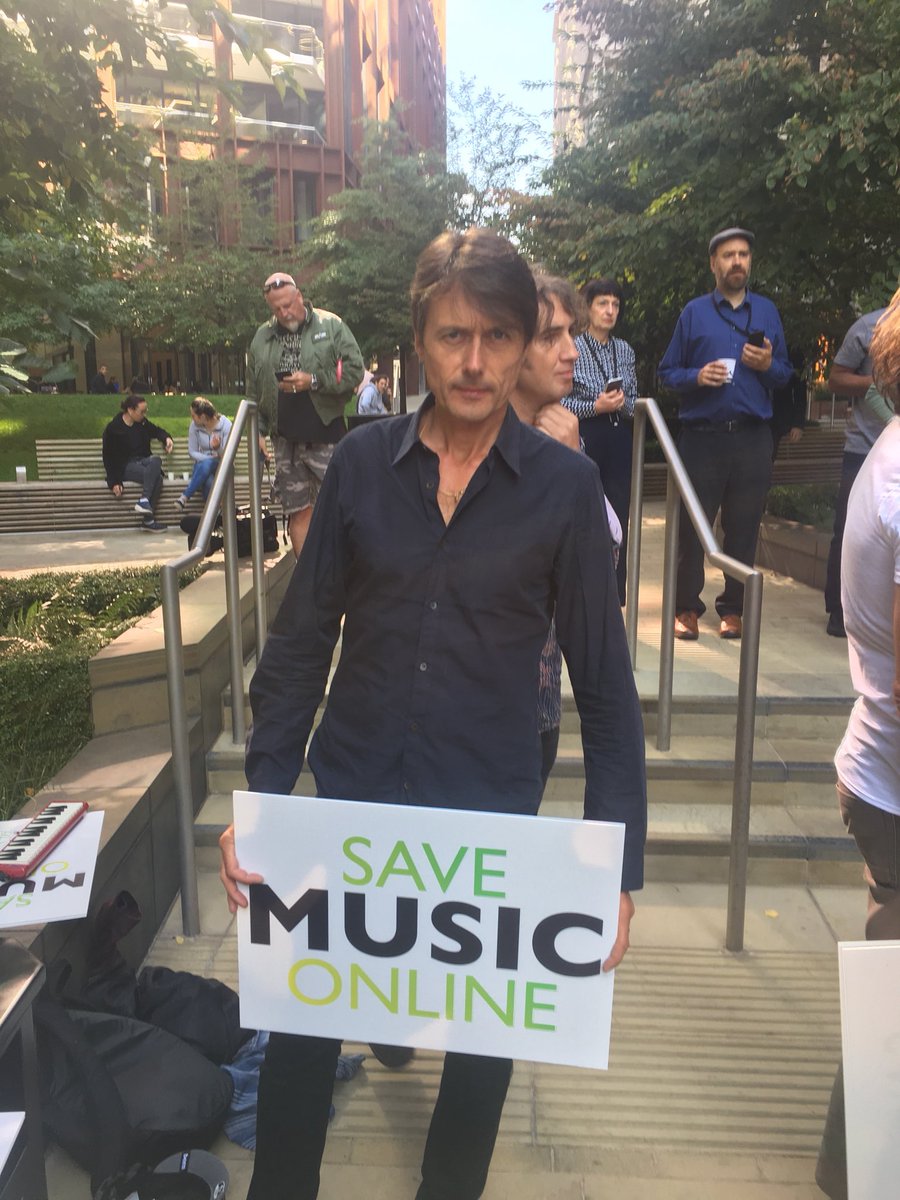
At the UK Music organized #LoveMusic busking event in London earlier today, artists, executives and even politicians turned out in support. Artists such as Brett Anderson, Ed Harcourt, Dave Rowntree, Madeleina Kay, Newton Faulkner and BASCA Chair Crispin Hunt. In addition a number of cross party British MPs who support the directive including Tom Watson, Nigel Evans and Kevin Brennan were amongst those in attendance.

One has to ask, if those opposing the EU Copyright Directive have such a compelling argument, why do they resort to such deceitful means? If we judge their actions, the arguments of those opposed to the directive hold no legitimacy and the European Parliament should vote in favour of the directive.

Andy Edwards, music manager and consultant
@andyedwardsbiz

How The New Generation Does Business – Midem 2018

Back at Midem this year to moderate a panel on the next generation of music business executives. This panel was inspired by my work with the UK Music Futures Group. Amanda Maxwell from the group joined me for an international panel featuring Ebony Haley (USA), Alison Chaigneau (France), and Andreea Magdalina (Romania/ USA).

Left to right:

Ebony Haley, Andy Edwards, Alison Chaigneau, Amanda Maxwell, Andreea Magdalina.

https://www.youtube.com/watch?v=kMeG6ZOO0mc&t=13s&pbjreload=10